Real Factory.
Real Builders.
Real Experience.
Not a reseller.
Not a broker.
A true American tiny home manufacturer.

Tiny Home Financing Options:
What to Know Before You Apply
Tiny home financing can differ substantially from a conventional mortgage. Potential loan options depend on whether the project is a tiny home on wheels, DIY kit, shell, park model RV, backyard ADU or modular residence, or permanently installed home—along with the property, foundation, certification pathway, manufacturer, total scope, lender criteria, and borrower qualifications. This overview is educational and does not constitute financial advice or a promise of approval.
Potential Tiny Home
Financing Paths
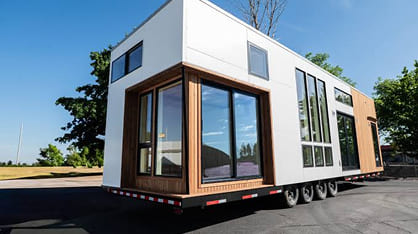
Personal or Unsecured Loans
Some buyers use personal financing for trailers, kits, shells, or smaller complete projects. Terms and approval depend on the lender and borrower.
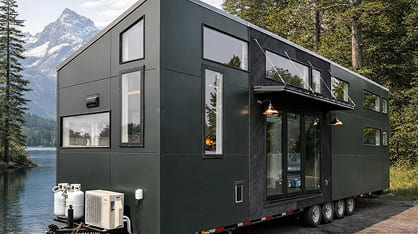
RV or Park Model Financing
A qualifying RV or park model may be eligible for specialty financing when the home, manufacturer, and intended use meet the lender’s requirements.
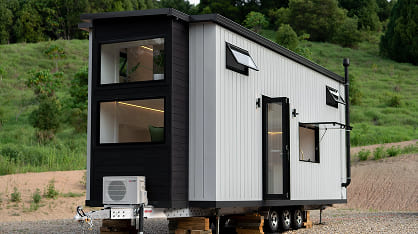
Home-Equity Financing
Property owners may consider a home-equity loan or line of credit for an ADU, backyard home, or site project. The lender may require plans, permits, contractor information, and property valuation.

Construction or Modular-Home Financing
Code-compliant modular or residential projects may qualify for construction-oriented financing. These loans typically involve documentation, inspections, draw schedules, and site requirements.
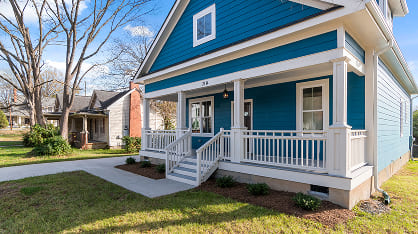
Local Banks and Credit Unions
Local lenders sometimes understand regional property values, ADU rules, agricultural properties, and nontraditional projects better than national consumer lenders.
Cash Plus Phased Construction
DIY builders may purchase the foundation and structural package first, then complete later stages as funds become available. A realistic budget and protected contingency are essential.
Documents a Tiny Home Lender May Request
Common lender documentation may include:
- Project proposal or purchase agreement
- Manufacturer information
- Property and site details
- Delivery and installation information
- Down payment or available equity
- Plans and specifications
- Certification or code pathway
- Estimated project schedule
- Insurance requirements
- Borrower income and credit information
Why Tiny Home Type and Classification Matter
A tiny home on wheels, park model RV, modular ADU, site-built residence, weather-tight shell, and DIY kit may be treated as different collateral and may not qualify for the same loan products. Clarify intended use, mobility, title or registration, foundation, property ownership, certification or code pathway, completion level, and installation plan before applying so the lender can evaluate the correct project type.
Questions to Ask a
Tiny Home Lender
Describe whether the project is a tiny home on wheels, park model RV, DIY kit, shell, backyard ADU, modular home, or permanently installed residence. Ask the lender to confirm in writing that it offers a loan product for that specific classification and intended use.
Some financing depends on land ownership, a permanent foundation, or the home becoming part of the real property. Other products may treat a movable home as personal property or an RV. Ask what property and installation conditions apply.
Ask about credit, income, debt-to-income, cash reserve, down-payment, equity, collateral, and minimum or maximum loan requirements. Criteria vary by lender, product, borrower, and project.
Confirm whether financing can include the home or kit, trailer or foundation, engineering, permits, site work, utilities, delivery, crane service, installation, finishes, appliances, taxes, and contingency—or only selected portions of the project.
Ask whether the lender needs a signed proposal, purchase agreement, plans, specifications, engineering documents, manufacturer information, certifications, inspection records, delivery terms, project schedule, or proof of permits before underwriting or funding.
Some lenders require an approved, licensed, insured, or experienced builder or manufacturer. Ask whether owner-builders, subcontracted trades, or factory-built components are eligible and what documentation the project team must provide.
For construction-oriented financing, ask when funds are released, which milestones trigger a draw, who verifies completed work, whether factory inspections are accepted, and how deposits or progress payments align with the manufacturer’s contract.
Ask how the lender treats a wheeled chassis, park-model configuration, hybrid foundation, site foundation, or permanent installation. The foundation can affect collateral classification, title or registration, appraisal, insurance, and available loan products.
Many lenders do not treat an unfinished kit or owner-builder project the same as a completed home. Ask what completion level, contractor involvement, licenses, inspections, contingency, and construction timeline are required.
Ask whether value is based on the home alone, completed real property, comparable sales, cost approach, plans and specifications, or another method. Confirm whether land, site improvements, delivery, and installed utilities are included.
The lender may require builder’s risk, course-of-construction, transport, property, liability, RV, or homeowner coverage at different stages. Ask when each policy must begin and which parties must be named or provide proof of coverage.
Ask which land-use approvals, building permits, plan reviews, inspections, certifications, or installation documents must be completed before approval, closing, a construction draw, or final conversion of the loan.
Compare annual percentage rate, fixed or variable rate, loan term, origination and closing fees, appraisal charges, draw fees, late-payment terms, prepayment penalties, and whether the loan converts or balloons after construction.
Tiny home projects can change because of engineering, permitting, material selections, or production schedules. Ask when approval expires, whether rate locks are available, and what happens if price, scope, delivery date, or completion date changes.
Request a written list of deposits, closing costs, taxes, permits, site work, utility connections, delivery, installation, insurance, interest during construction, change orders, and contingency that must be paid from cash or another source.
What The Tiny House Experts Can Provide
The Tiny House Experts is not a lender, broker, or financial adviser and does not guarantee financing, rates, terms, appraisals, or approval. For a defined project, we can provide available proposals, product specifications, manufacturer information, drawings, schedules, delivery assumptions, and applicable documentation so you and the lender can discuss the actual scope.
Budget for the Complete Tiny Home Project
Build a total-project budget that includes the home or kit, trailer or foundation, engineering, plan review, permits, site preparation, utility connections, delivery, escorts, crane or installation equipment, labor, finishes, appliances, taxes, insurance, interest and fees, change orders, and a realistic contingency. A financing decision should be based on the complete project—not only the factory price.
Factory Direct
Lifetime Warranty
American Made
Nationwide Delivery