
Why Build With Cold-Formed Steel Framing?
Galvanized cold-formed steel provides dimensionally consistent framing for tiny homes, ADUs, modular structures, commercial projects, and factory-built construction. The steel members do not shrink, twist, rot, or attract termites, but successful performance still depends on engineering, bracing, connections, corrosion protection, wall-assembly design, installation, and moisture management.
The Steel Advantage
Dimensionally stable and consistently straight
Non-combustible framing material
Resistant to rot, mold, termites, and moisture-related movement
Lightweight components that can simplify handling and packaging
CNC-manufactured for precise fit
Pre-cut and pre-punched for efficient assembly
Reduced field waste and fewer material surprises
Controlled digital files for repeatable manufacturing
Lifetime Warranty Coverage
Qualifying Trailer Made steel frame systems are backed by lifetime warranty coverage. Project-specific terms and eligibility are provided with the proposal and warranty documents.
Precision for DIY Builders
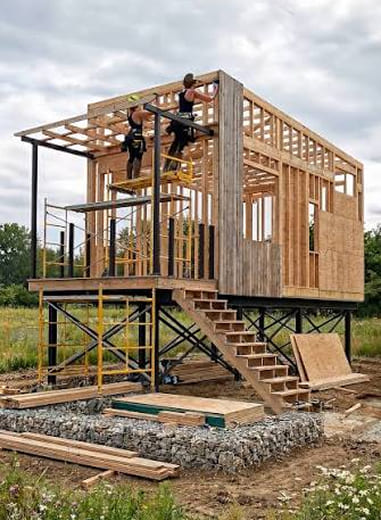
Pre-cut, punched, and labeled members can reduce field measuring, cutting, and material variation for capable DIY builders. The kit does not eliminate the need to verify the foundation and dimensions, follow the drawings and assembly sequence, install temporary bracing, use specified fasteners and connections, protect materials, work safely at height, and complete required permits and inspections.
Consistency for Professional Builders
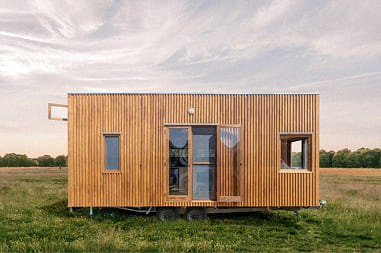
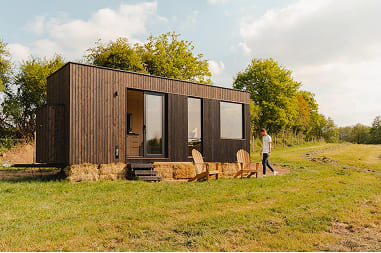
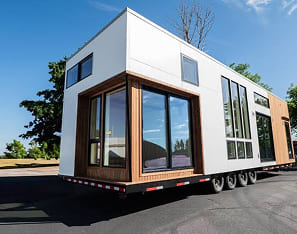
Controlled models and manufacturing files can help professional builders maintain consistent member geometry, openings, connection details, labels, and packaging across prototypes or repeat units. Consistent production still requires revision control, coordinated architectural and MEP interfaces, field-tolerance management, erection planning, quality checks, and inspection.
Built for Transportable Structures
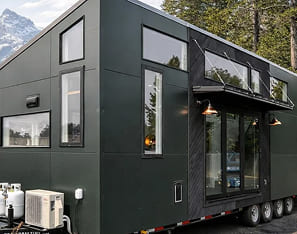
Tiny homes and modular structures can experience lifting, vibration, braking, cornering, racking, and road-induced forces in addition to in-service building loads. Transportable steel frames must be engineered, connected, braced, lifted, secured, and installed for the project-specific transportation and set conditions; steel alone does not make a structure transport-ready.
Better Use of Materials
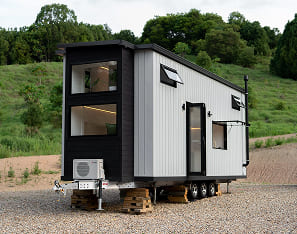
Precision manufacturing helps reduce offcuts, damaged pieces, and field corrections. The result is a cleaner jobsite and a more efficient framing process.
Steel and Thermal Performance
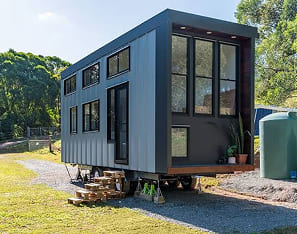
Steel framing must be paired with a properly designed insulation, air-control, water-control, vapor, and thermal-bridging strategy. Coatings and cut edges also require appropriate handling and corrosion protection for the exposure conditions. Our team can coordinate the defined frame, wall assembly, exterior insulation, and shell-package interfaces, while final energy, moisture, fire, and code performance depends on the complete approved assembly.
The Right Material for the Right Project
Steel is not automatically the right material for every project or a direct one-for-one substitute for lumber. The choice should consider spans and loads, building use, site climate, transportation, fire and energy requirements, wall thickness, trade familiarity, tools, assembly plan, budget, schedule, and approval path. Share the project plans, location, foundation, design criteria, quantity, and desired scope to compare a cold-formed steel package with the project requirements.
Factory Direct
Lifetime Warranty
American Made
Nationwide Delivery